Where should it go?
In a corner of the room, away from walkways and the quiet corner: pretend play is talkative and mobile. Mark out the area with a rug, a low shelf or the kitchen itself, keeping a clear view for the adult.
What do you start with?
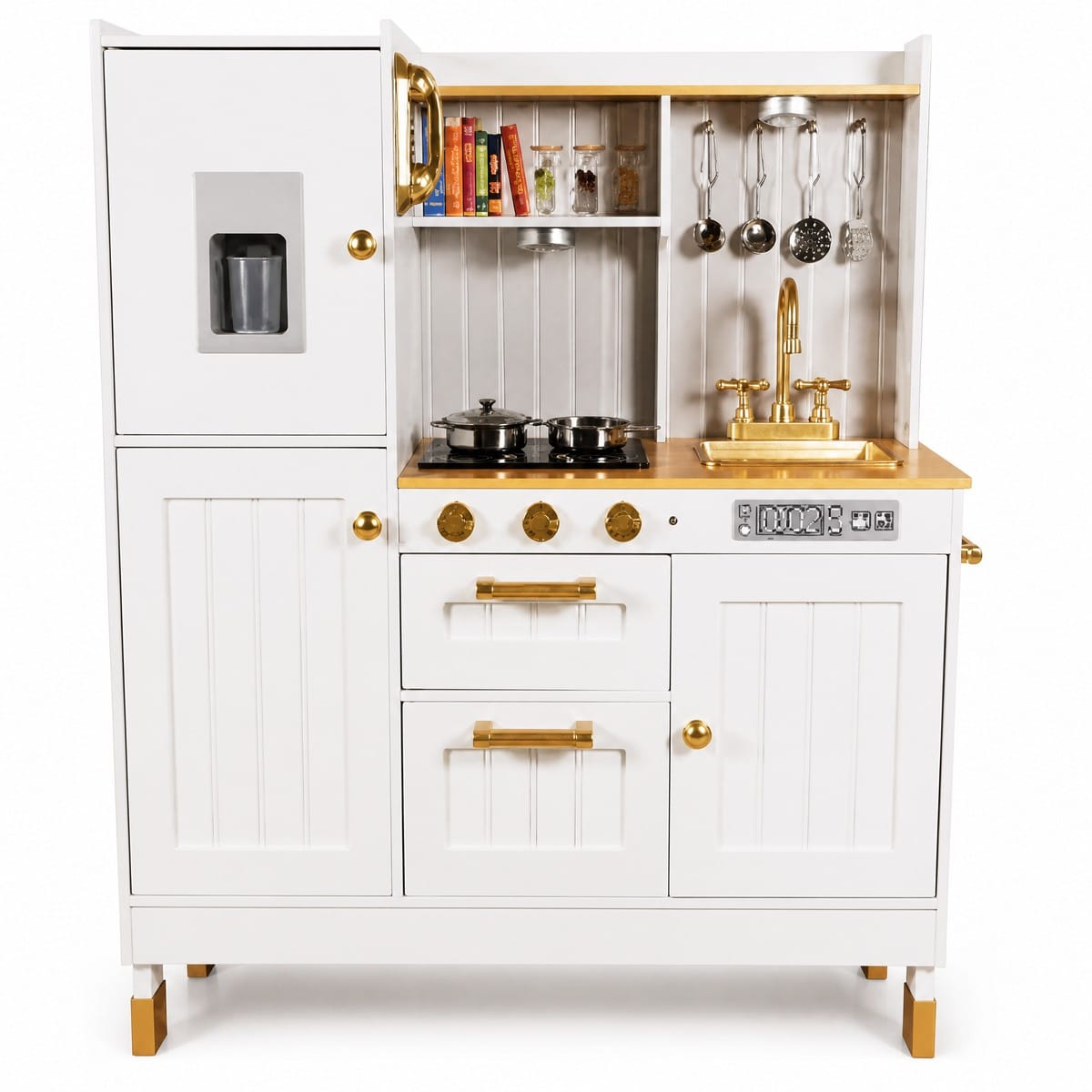
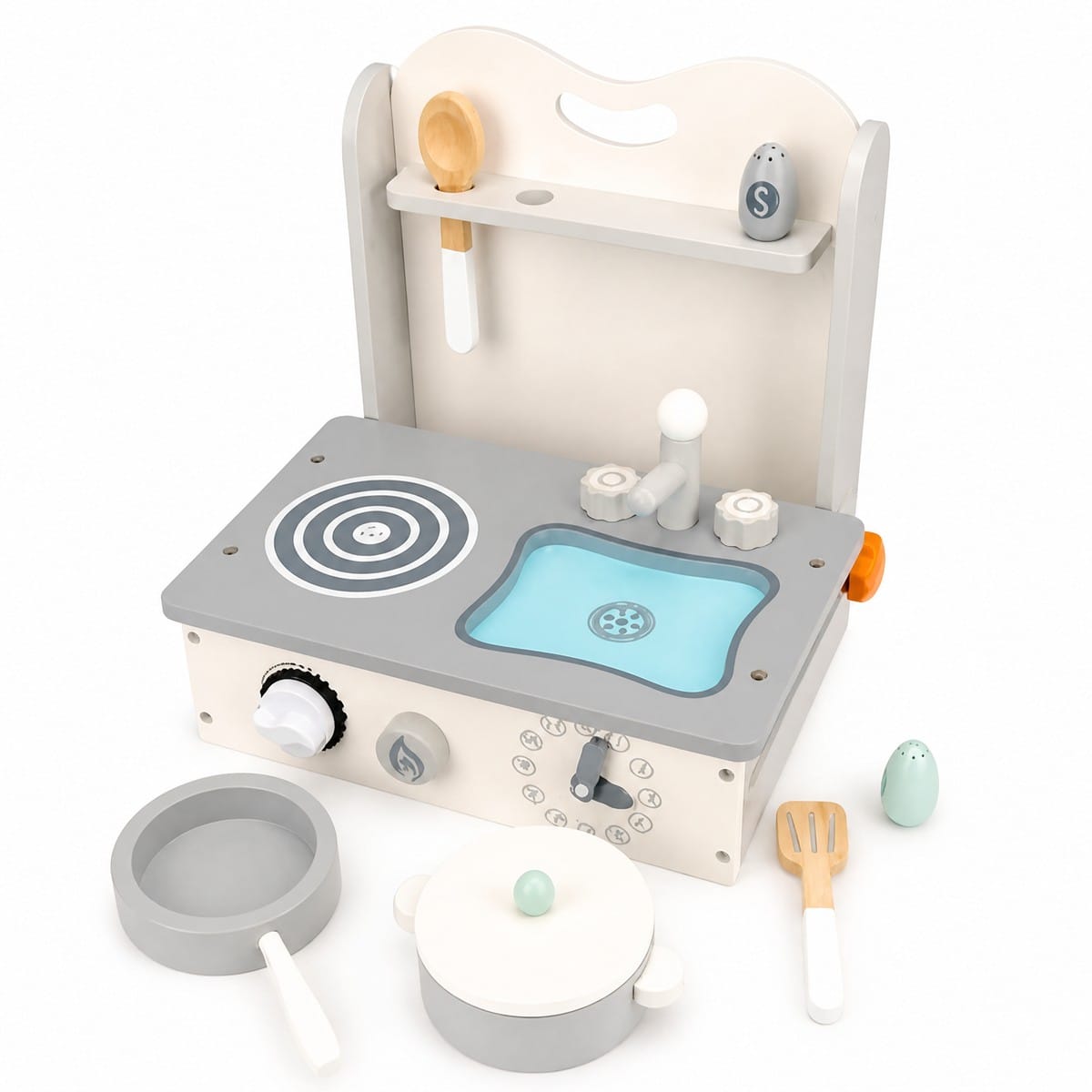
- A kitchen: a standing model if space allows, a tabletop cooker if not
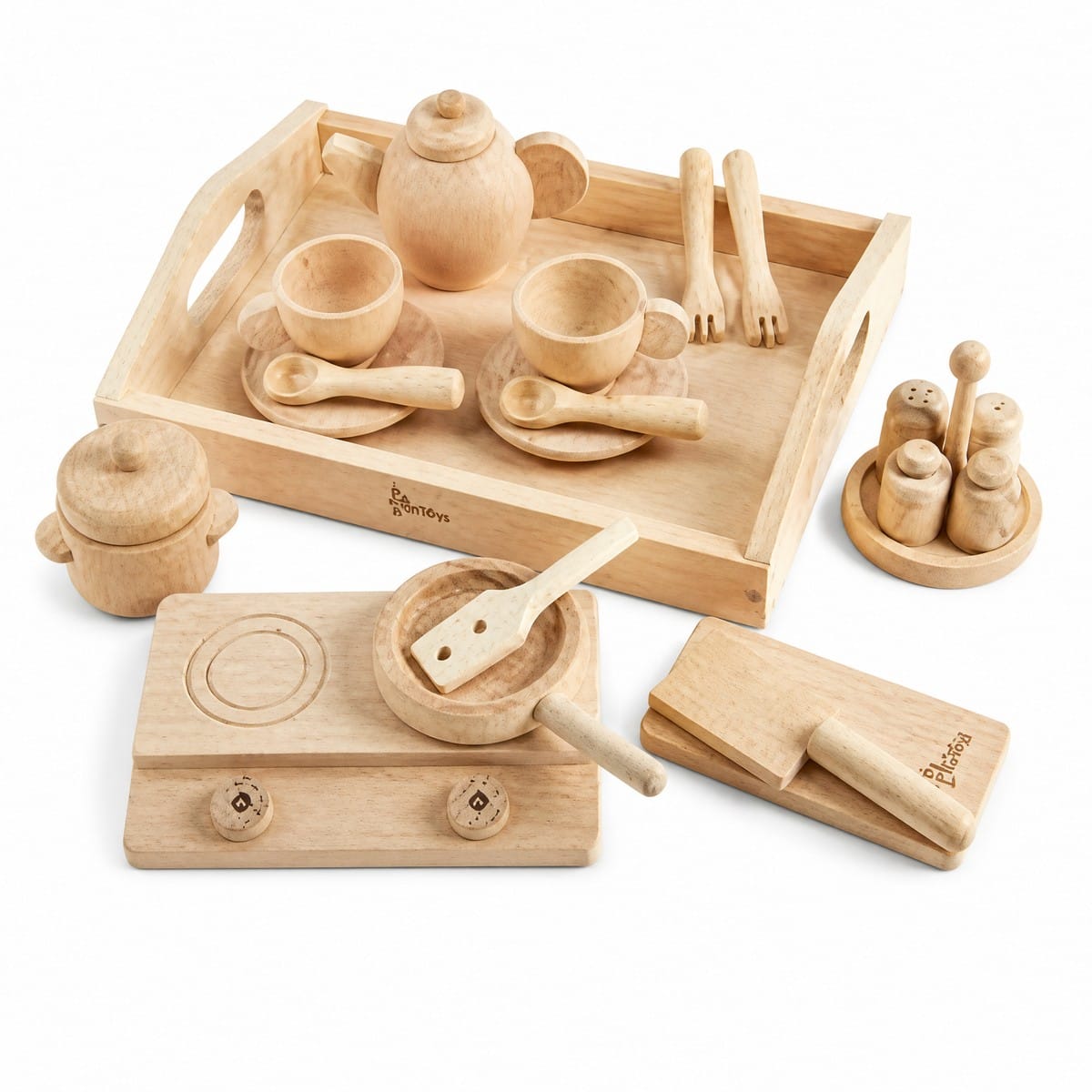
- Crockery: cups, plates, pans, enough for three or four children
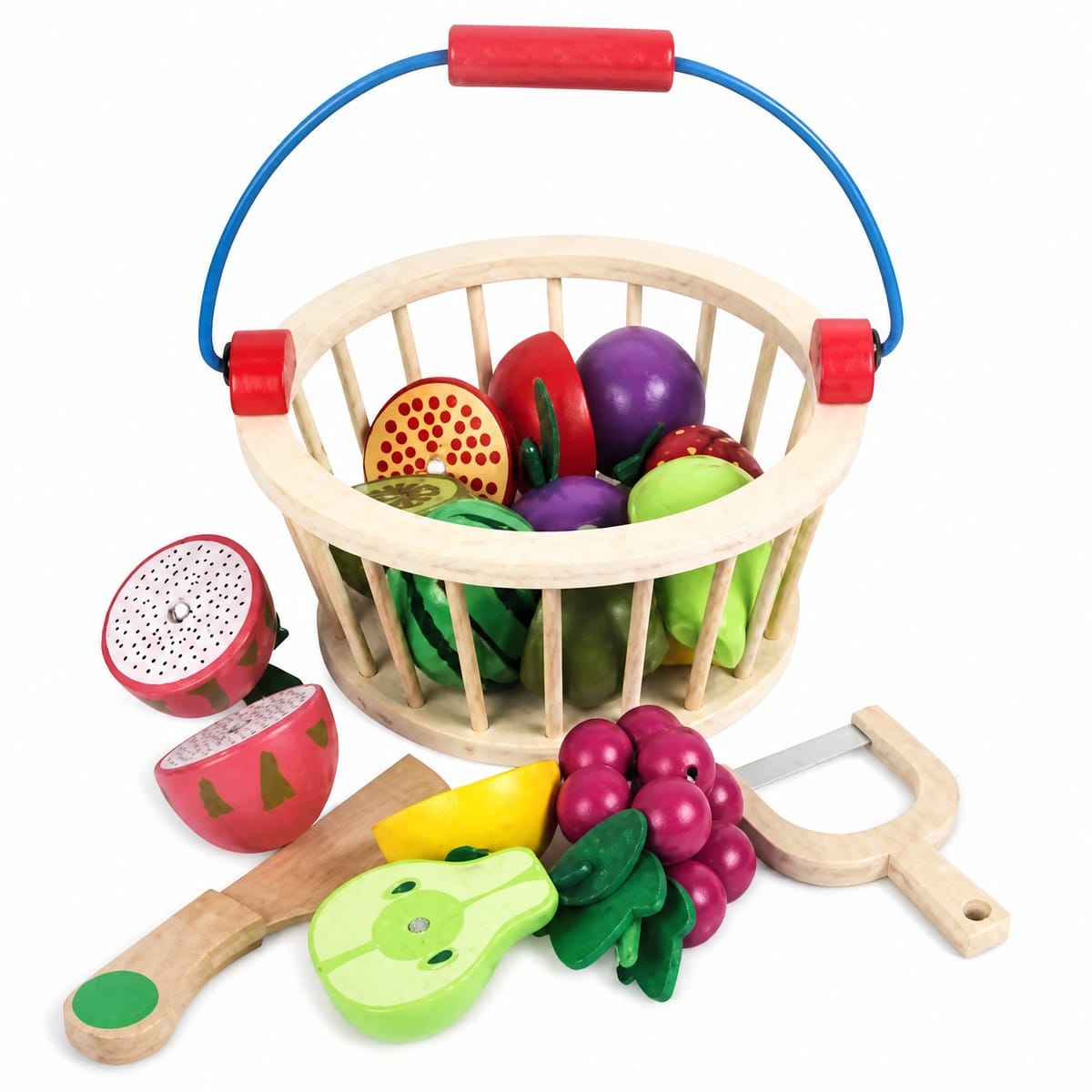
- Food to cut, which gives the hands something to do
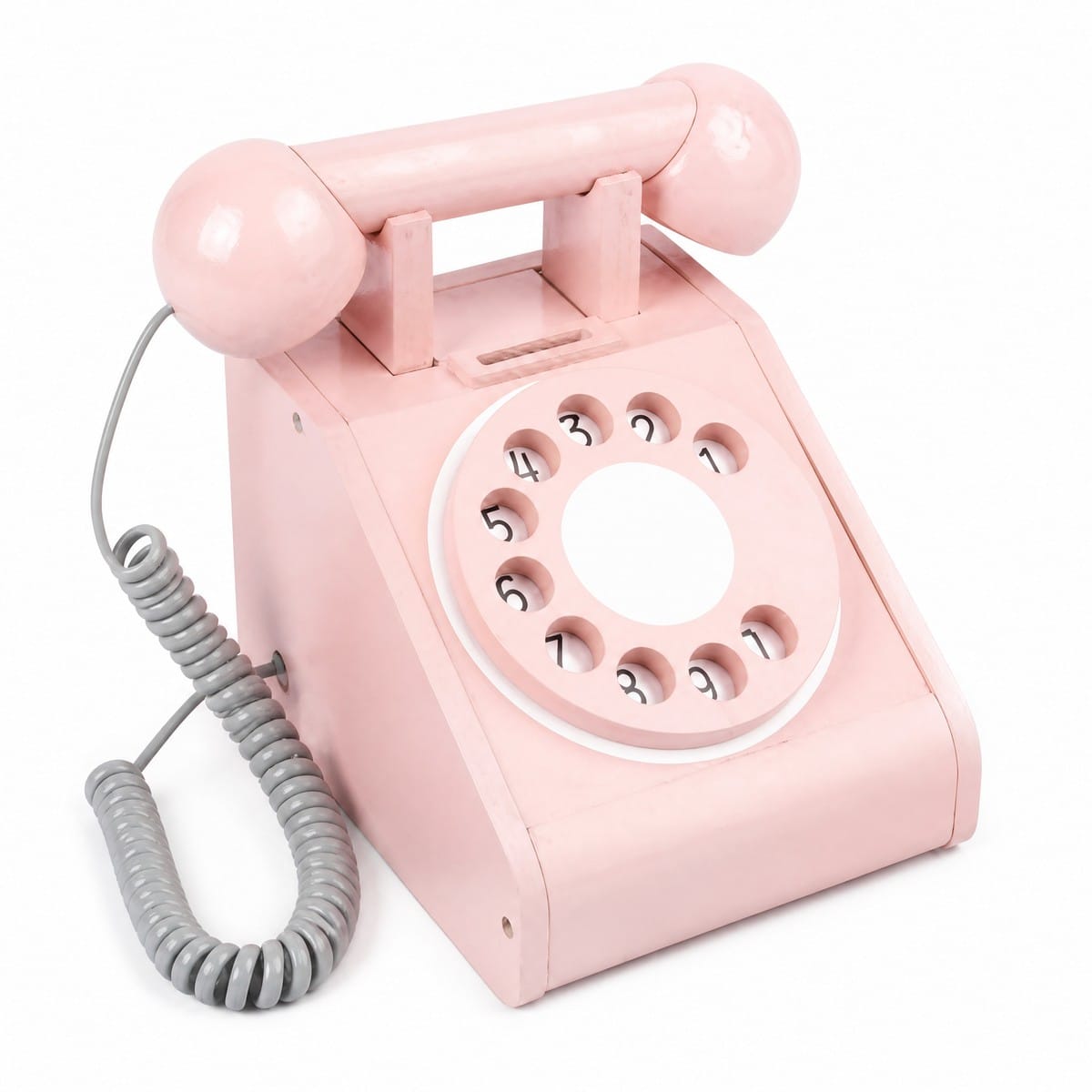
- A telephone, for first made-up conversations
- A table and two low chairs
Which themes come next?
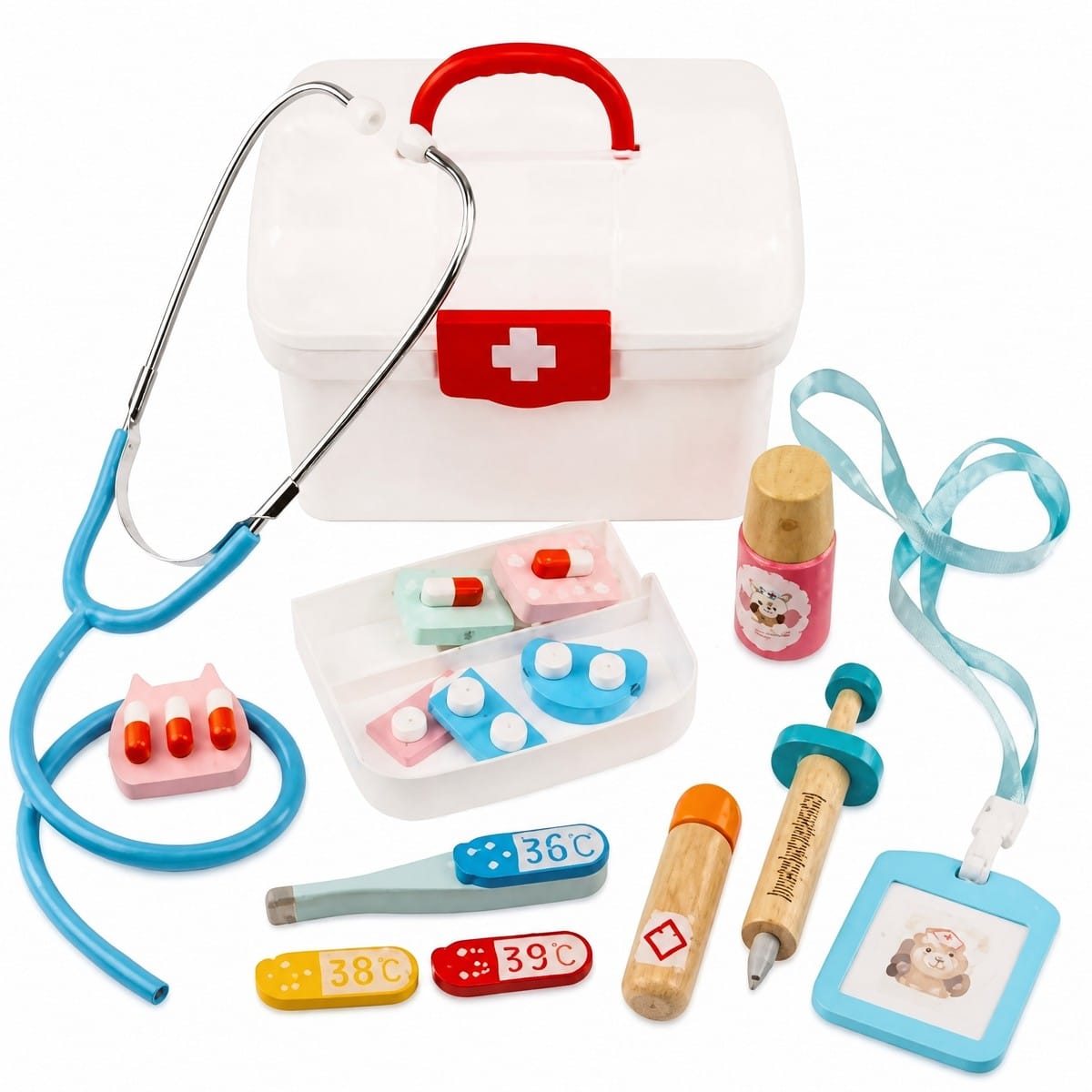
- Doctor: case, stethoscope, thermometer. Useful before a medical visit or a vaccination.
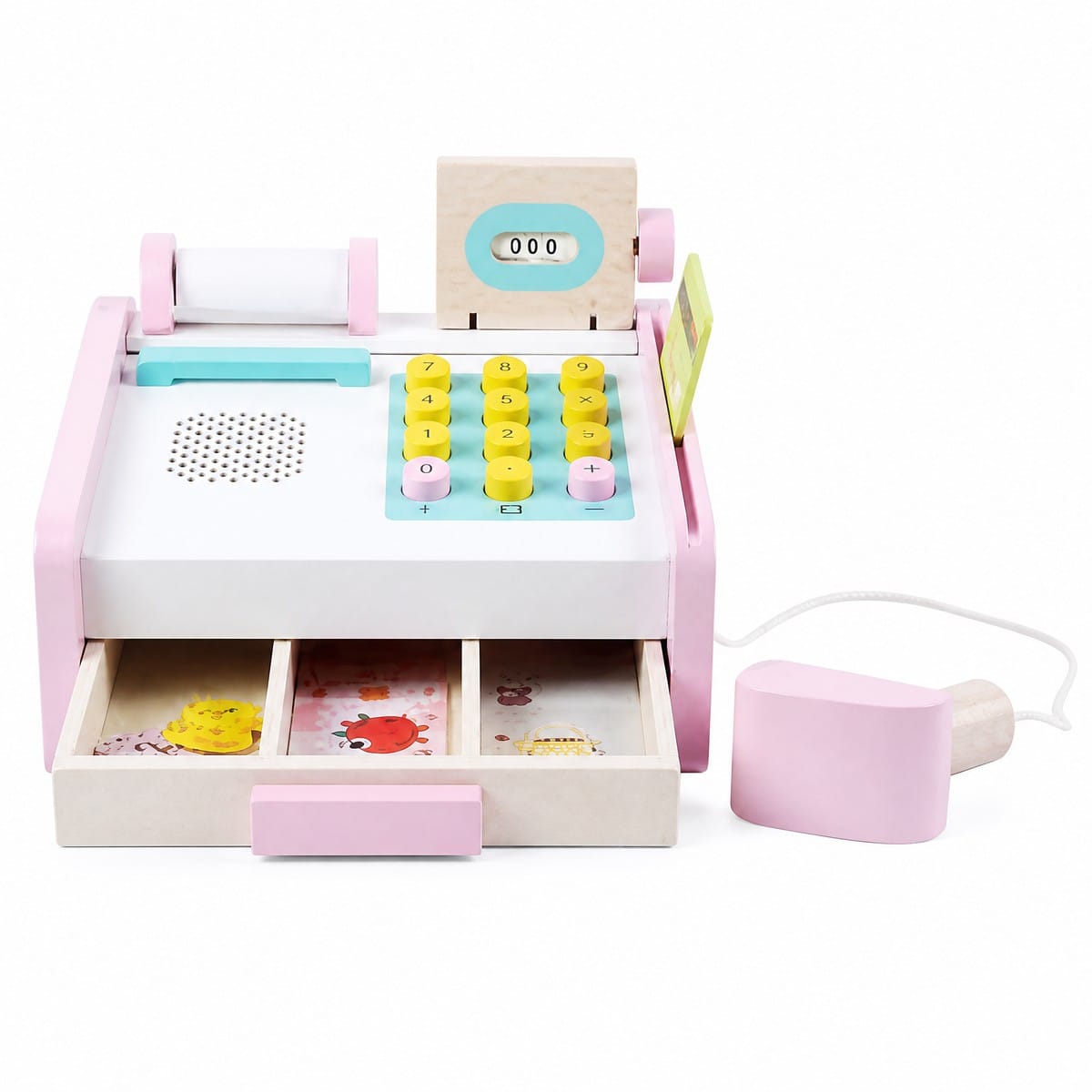
- Shop: cash register, food, basket. Children count and exchange.
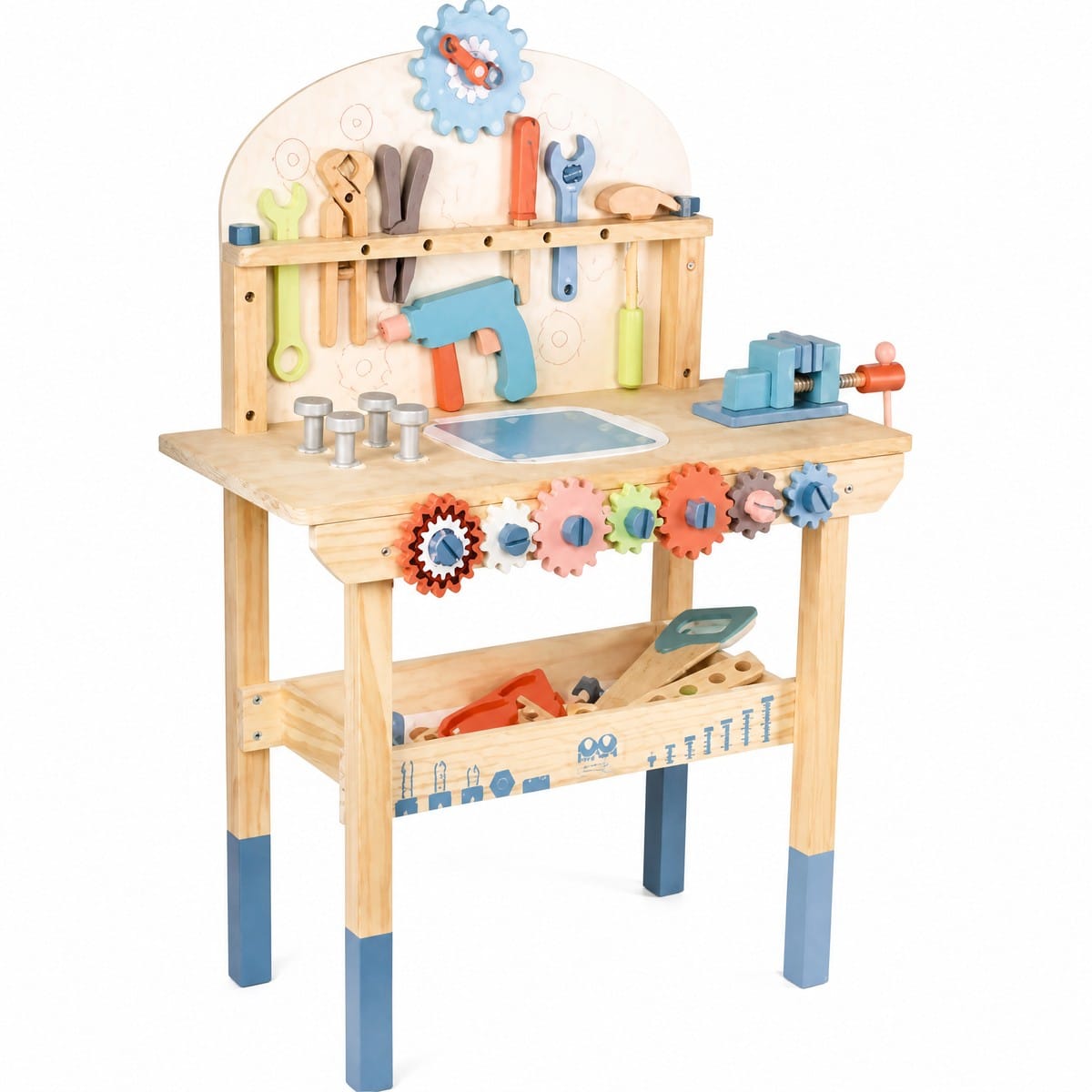
- Workshop: workbench, tools, screws and nuts.
- Café or pastry shop: coffee machine, cakes, stand.
- Travel: train, car park, vehicles.
How many objects do you need?
Enough for several children to play the same role at once, and no more. Four identical cups are better than a full but mismatched set. With too many objects, the play turns into moving things around.
How often should the theme change?
Keep the kitchen permanently and change the second theme when the play runs out of steam, generally after a few weeks. Announce the change and set it up with the children: putting the old theme away is part of the play.
What is the adult’s role?
Observe first. Join in when invited, in a supporting role: the customer, the patient. Naming objects and actions builds vocabulary without directing the storyline.